This page contains literature and other sources which may be used to address the different aspects of interpreting slavery at the historic sites we steward. This list is by no means exhaustive, but hopefully will supply you with a good starting point that will lead to other relevant sources.
The sources shared here are broken into the following categories for easier perusal.
Museum Practice & Interpretation
Decorative Art & Material Culture Studies
Historical & Primary Texts
Race & Slavery Today
Museum Practice & Interpretation:
This section contains readings that address best practices in museums, engagement with outside parties, and provide examples of ways museum have and have not begun to interpret slavery at their sites.
- Eichstedt, Jennifer L., and Stephen Small. Representations of Slavery: Race and Ideology in Southern Plantation Museums. Washington, DC: Smithsonian Books, 2002.
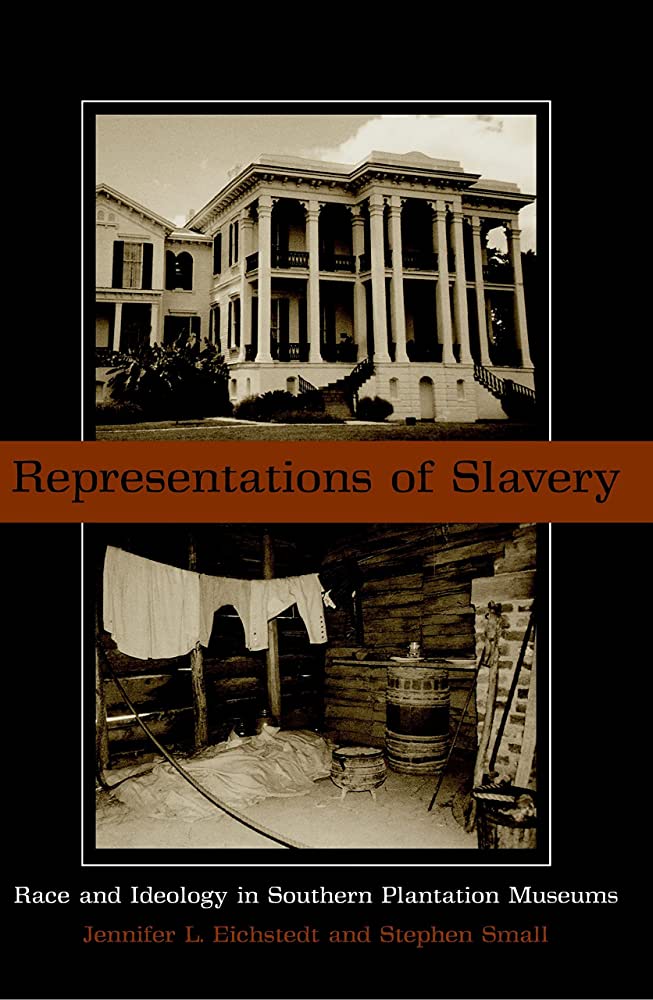
In this 2002 publication Eichstedt and Small survey house museums (mostly rural plantations, with some exceptions) in Virginia, Georgia, and Louisiana to interrogate the “racialized regime of representation that valorizes the white elite of the pre-emancipation South.” The two authors discuss the various interpretations they encounter at the 122 sites they visited through four primary categories. These categories are different ways the museums addressed (or did not address) slavery: ”symbolic annihilation and erasure,” “trivialization and deflection,” “segregation and marginalization of of knowledge,” and “relative incorporation.” Although this book was published in 2002, it contents are still completely relevant to the work museums do today.
- Engaging Descendant Communities in the Interpretation of Slavery at Museums and Historic Sites: A Rubric of Best Practices Established by the Summit on Teaching Slavery. National Trust for Historic Preservation African American Cultural Heritage Action Fund, 2018.
This Rubric produced at the Summit on Teaching Slavery (2018) is a self-grading tool and guide for museums and historic sites to actively and successfully engage descendant communities through their research interpretation, programing, and all aspects of museum work. It breaks down these aspects of museum work into digestible sections that provide museum professionals with methods of engagement and types of action that can and should be taken to bring these vital outside voices into museum spaces.
- “Excellence in DEAI Report.” Report from the Excellence in DEAI Task Force, American Alliance of Museums, 2022.

This online resource is meant to ensure diversity, equity, accessibility, and inclusion within museums at every level. While it is not an exhaustive resource that can address all issues that may arise within museums, it does act as a guide which outlines what it calls “Core Concepts and Key Indicators of excellence in DEAI.”
- Gallas, Kristin L. and James DeWolf Perry, eds. Interpreting Slavery at Museums and Historic Sites. United Kingdom: Rowman & Littlefield Publishers, 2014.
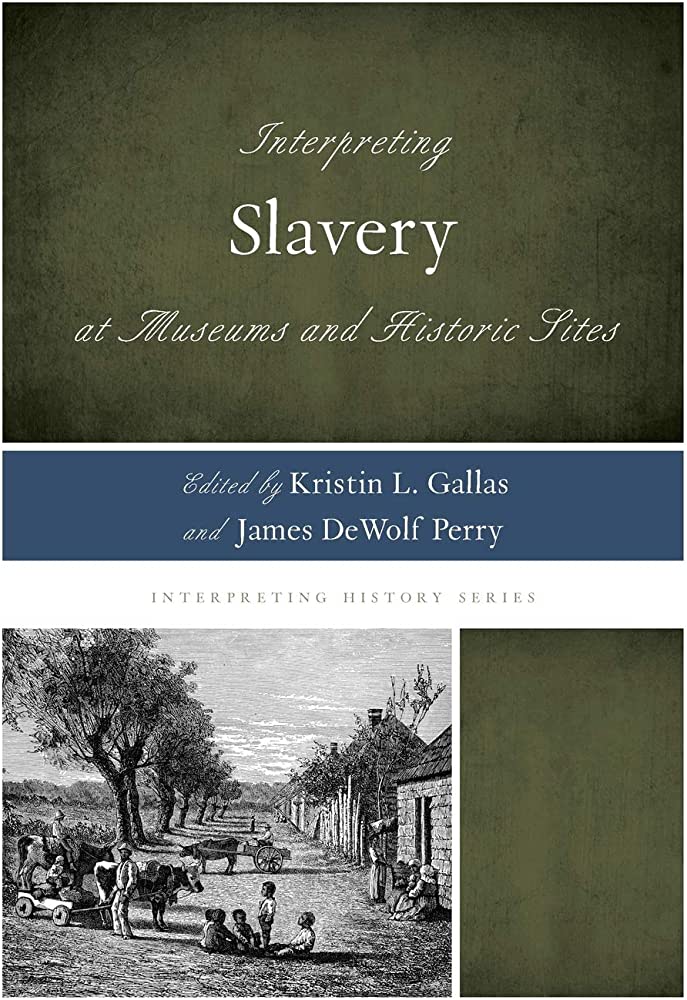
This edited volume lays out the hurdles that museums and historic sites face when beginning the work of interpreting slavery, offers insightful explanations of the difficulties encountered in doing it, and offers helpful methods to providing comprehensive and inclusive histories to visitors.
- Ng, Wendy; Syrus Marcus Ware; and Alyssa Greenberg, “Activating Diversity and Inclusion: A Blueprint for Museum Educators as Allies and Change Makers,” Journal of Museum Education, vol. 42, no. 2 (2017).
This reading address the problematic power imbalances which uphold white supremacy despite efforts within the museum field toward diversity and inclusion. The authors introduce practical strategies to build and maintain equitable relationships between museum staff and visitors that act as guiding tenets of allyship.
- Halifax, Shawn. “McLeod Plantation Historic Site: Sowing Truth and Change.” The Public Historian 40, no. 3 (2018): 252–77.
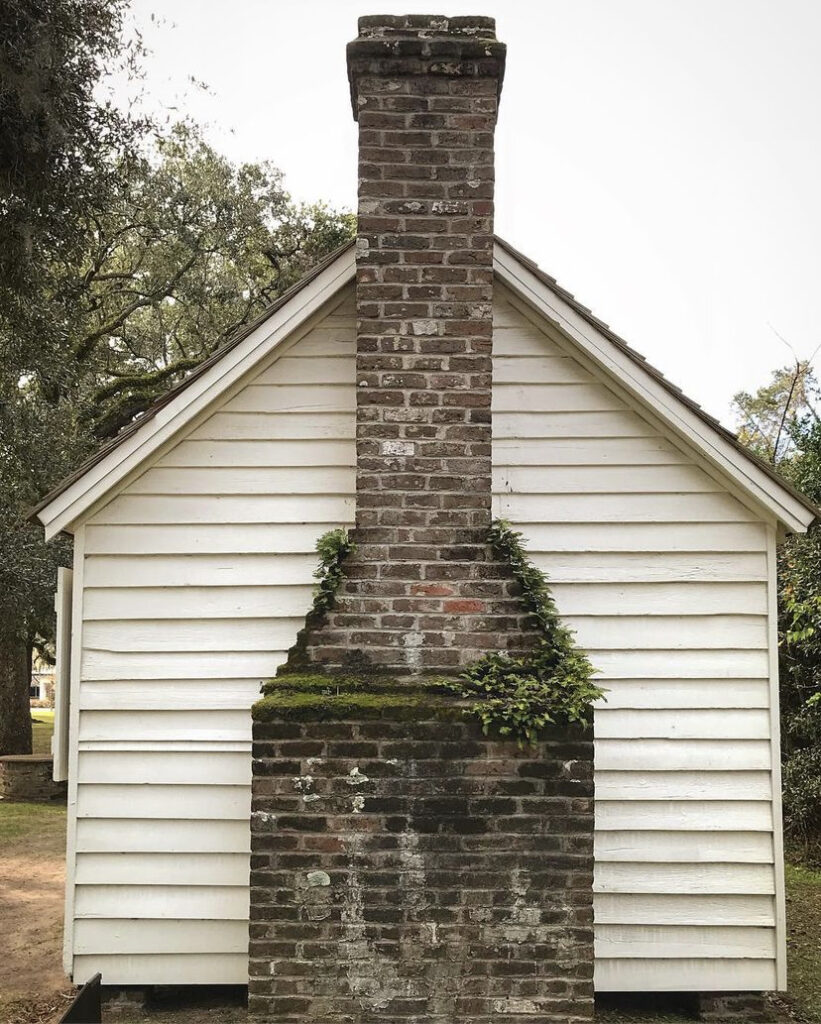
Halifax gives a detailed and emotional explanation of the process of how McLeod Plantation Historic Site was acquired by Charleston County Parks, the decision to center African American history on the site interpreting the period between 1851 to 1990, the process of implementing new interpretations along with staff training, how interpretations and operations have changed since beginning, and reflections on the current state African American-centered museums.
- “Language of Slavery.” National Park Service. 28 January, 2022.
This is an online resource made published by the National Parks Service which is a part of their Underground Rail Road digital resource. It contains a list of useful terms for discussing slavery and their definitions as well as links to other aspects of the larger online resource.
- Lawton Christopher R Laura E Nelson and Randy L Reid. 2021. Seen/Unseen: Hidden Lives in a Community of Enslaved Georgians. Athens: University of Georgia Press.
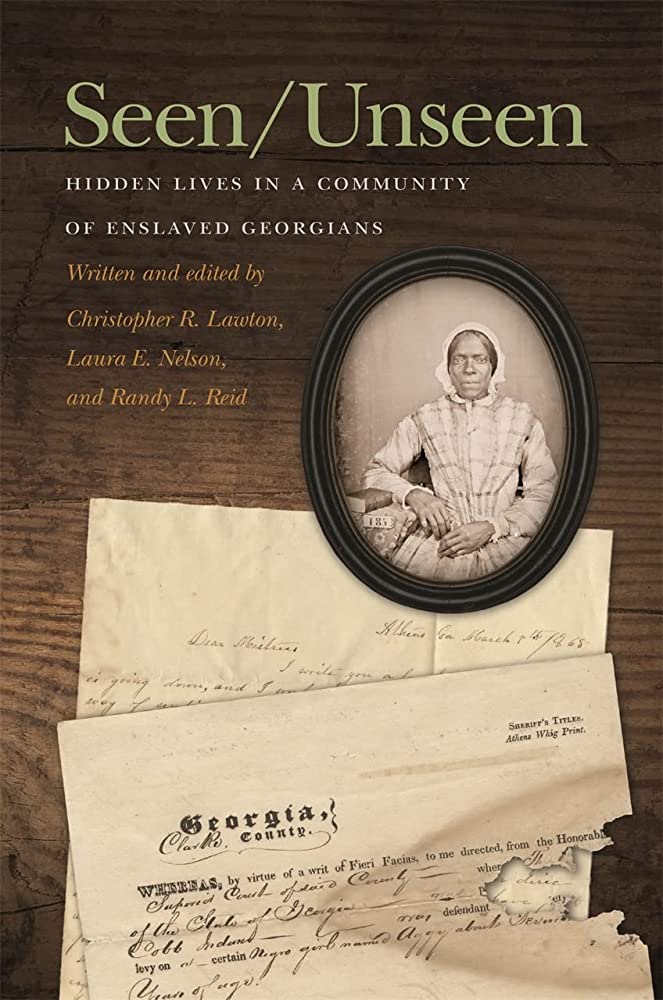
Three historians revisit thousands of family letters from one of Georgia’s most politically prominent and wealthiest antebellum families to document the lives of the individuals they enslaved. What this book shows readers is how to pull details from second-hand experiences about the lives, networks, and families of enslaved people, despite being recorded in the words of their white enslavers. Although this kind of documentation only gives us fragmented details about their lives, it shows us that the evidence has always been there. Museums, archives, and special collections contain countless stories like the ones shared in this volume of the men, women, and children whose very existence has historically been overlooked.
- P. Gabrielle Foreman, et al. “Writing about Slavery/Teaching About Slavery: This Might Help” community-sourced document.
This is a free community-sourced short guide for use by museum professionals, journalists, scholars, students, and anyone else tasked with writing on the topic of slavery. It can be used as a guide, which is to say that it is not a “checklist” that holds to hard an fast conventions, but rather provides suggestions for how to write about the topic.
Here are some additional related readings that may also be of interest:
- Brincat, Lauren. “The Jupiter Hammon Project: Confronting Slavery at Preservation Long Island’s Joseph Lloyd Manor.” The Magazine of the Decorative Arts Trust. Winter 2020-21.
- McKittrick, Katherine. Demonic Grounds: Black Women and the Cartographies of Struggle. University of Minnesota Press, 2006.
- “Critical Conversation: Decorative Arts and Addressing Diversity, Equity and Inclusion.” 2020. The Decorative Arts Trust, Youtube. Online video.
- Crenshaw, Kimberle. “Mapping the Margins: Intersectionality, Identity Politics, and Violence against Women of Color.” Stanford Law Review 43, no. 6 (1991): 1241–99.
- Satterthwaite, Amber and Trish Smith. “Peopling Drayton Hall.” The Magazine of the Decorative Arts Trust Winter 2020-21.
- Ruffins, Fath Davis. “Grassroots Museums & the Changing Landscape of the Public Humanities.” Daedalus 151, no. 3 (2022): 108–23.
- Ruffins, Fath Davis. “Revisiting the Old Plantation: Reparations, Reconciliation, and Museumizing American Slavery,” in Museum Fictions: Public Cultures/Global Transformations, edited by Ivan Karp, 394-434. Durham: Duke University Press, 2006.
Decorative Arts & Material Culture Studies:
These readings are related to the study of the art and objects found within our house museums. They can provide a roadmap for how to look at your collections with new perspectives.
- Anderson, Jennifer L.. Mahogany:The Cost of Luxury in Early America. Cambridge: Harvard University Press, 2012.
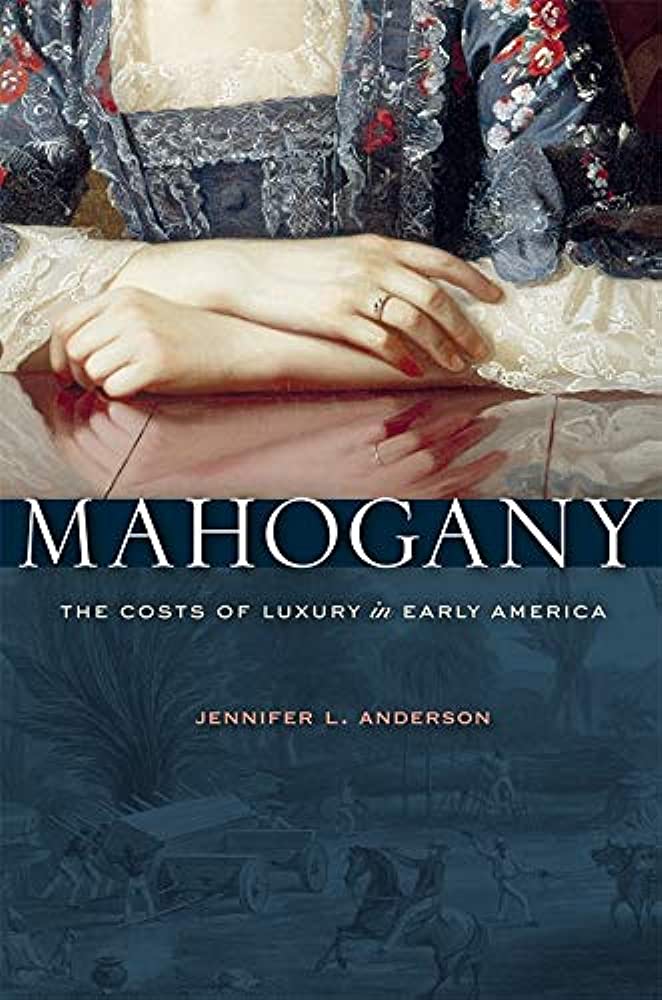
Jennifer Anderson explores the vast history of cultivation, trade networks, and cultural significance of what is possibly the world’s most sought after wood. Slavery was an integral part of the commerce of mahogany from the labor used in its harvesting to the foundations of wealth used to acquire the refined goods it produced. This book discusses the biology of the tree as well as the commercial markets is supplied in Europe and North America.
- “Critical Conversation: Inclusive Narratives at Historic House Museums.” 2020. The Decorative Arts Trust, Youtube. Online video.
The Decorative Arts Trust brought together several museum professionals to discuss how they have implemented interpretations of slavery, wherein the panelists outline their own museums’ interpretations followed by questions from a moderator on the topic.
- Miles, Tiya. All That She Carried: The Journey of Ashley’s Sack, a Black Family Keepsake. United States: Random House Publishing Group, 2022.
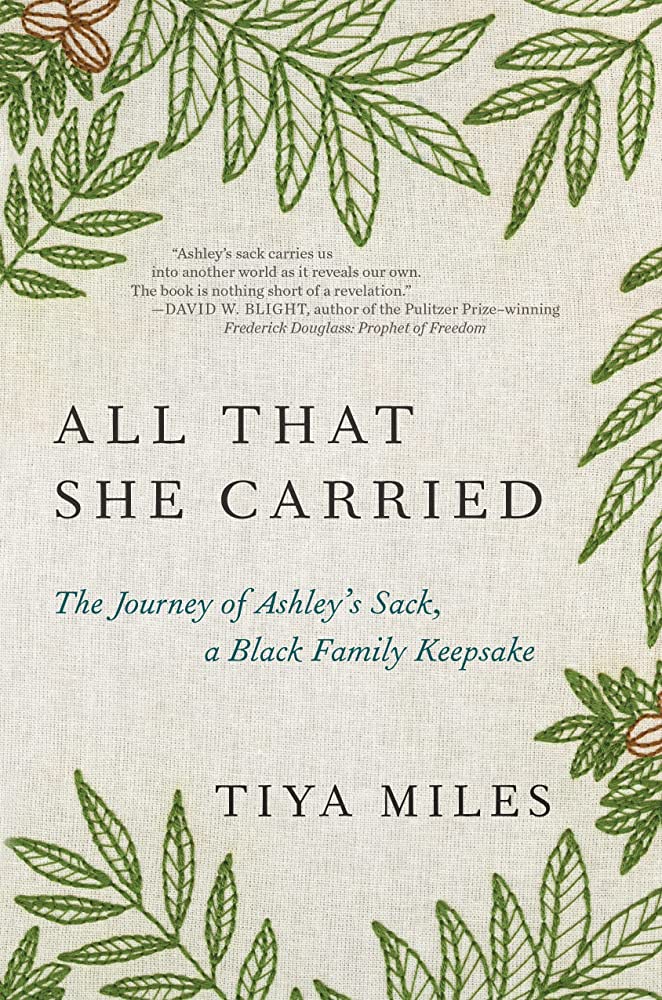
Historian Tiya Miles weaves together the narrative of the life of an object passed down through three generations of Black women in America. She traces the life of an enslaved woman named Rose in the 1850s in South Carolina, the forced separation between her and her daughter, Ashley, and the life of Ashley’s granddaughter Rose using a single object as her point of origin for this entire chronicle. If nothing else, this book stands as a testament to the histories that can be uncovered by looking to objects and artworks as primary documents when the traditional method of only replying upon paper documentation falls short.
- Dana E. Byrd. “Motive Power: Fans, Punkahs, and Fly Brushes in the Antebellum South.” Buildings & Landscapes: Journal of the Vernacular Architecture Forum 23, no. 1 (2016): 29–51.
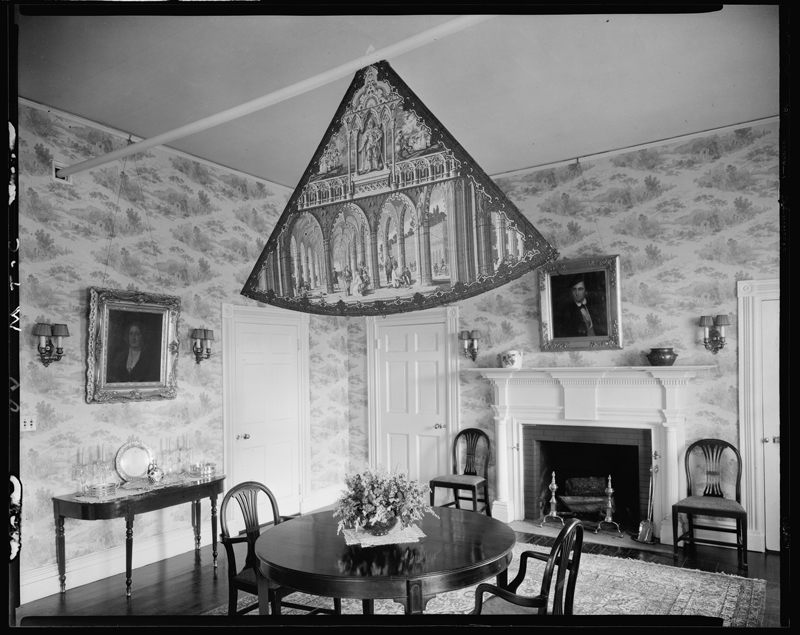
Dana Byrd’s Punka Project documents the ceiling-mounted fans (known as punkas) manipulated by enslaved workers in domestic spaces of the antebellum South. This is a digital humanities project has documented these objects in houses from Kentucky to Florida and examines their function and passive and active roles enslaved workers played in their locomotion.
- Byrd, Dana and Tyler DeAngelis. 2015. “Tracing Transformations: Hilton Head Island’s Journey to Freedom, 1860-1865,“Nineteenth-Century Art Worldwide 14(3).
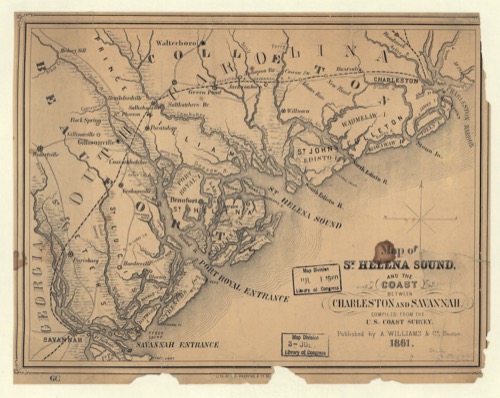
Dana Byrd and Tyler DeAngelis researched the Freedmen community that formed on Hilton Head Island, South Carolina, during the American Civil War when the United States Army occupied the properties on the island. The community became known as Mitchelville, and grew rapidly during and shortly after the war. When Reconstruction officially ended in 1877 this community quickly declined as the army finally withdrew from the area. This article is also part of a digital humanities project which has additional resources and interactive components.
These are additional texts on decorative art and material culture that examine the role slavery played in the manufacture or goods as well as how enslaved people used or interacted with objects.
- Beach, Caitlin Meehye. “Sculpture at the End of Slavery.” The Magazine of the Decorative Arts Trust Winter 2022-23.
- Bolt, Janine Yorimoto. “Enslavement and Its Legacies: ‘Constantly Looking at Me’: Slavery and the Development of Colonial American Portraiture.” Winterthur Portfolio 56, no. 2-3 (Summer/Autumn 2022): 127-166.
- Bunch, Lonnie. “Flies in the Buttermilk” in Johnetta Betsch Cole and Laura L. Lott, eds., Diversity, Equity, Accessibility, and Inclusion in Museums (American Alliance of Museums and Rowman & Littlefield, 2019).
- Casey, Emily C. “A More Perfect Atlantic World: Abolition, Liberty, and Empire in Art After the American Revolution.” Winterthur Portfolio 55, no. 4 (Winter 2021): 207-256.
- Cox, Sharon. “Harry Mordecai, Plasterer and Bricklayer of Frankfort, Kentucky.” The MESDA Journal 41 (2020).
- Gruner, Mariah. “Enslavement and Its Legacies: ‘May the points of our needles prick’: Antislavery Needlework and the Cultivation of the Abolitionist Self.” Winterthur Portfolio 55, no. 2-3 (Summer/Autumn 2021).
- Hartman, Michael W. “Optics and Enslavement in Charles Wilson Peale’s Benjamin and Eleanor Laming.” The Magazine of the Decorative Arts Trust Summer 2021.
- Hughes, Geoff. “Peter Oliver: Revisiting and Reassessing the Life of a Moravian African American Potter.” The MESDA Journal 42-43 (2022).
- Long, Graham and Gary Albert. “John Gough, Free Black Cabinetmaker of Charleston, 1763-1791.” The MESDA Journal 41 (2020).
- McGlyn, Bethany J. and Tiffany Momon. “The Contributions of Enslaved Artisans in Annapolis and Charleston: New Research and Resources.” The Magazine of the Decorative Arts Trust Winter 2020-21.
- Momon, Tiffany. “John ‘Quash’ Williams, Charleston Builder.” The MESDA Journal 41 (2020).
- Rosengarten, Dale, Theodore Rosengarten, Enid Schildkrout, and Judith Ann Carney. Grass Roots: African Origins of an American Art. New York: Museum for African Art, 2008.
- Van Horn, Jennifer. Portraits of Resistance: Activating Art During Slavery. New Haven: Yale University Press, 2022.
- Vlach, John Michael. Back of the Big House: The Architecture of Plantation Slavery. Chapel Hill: University of North Carolina Press, 1993.
- Vlach, John Michael. The Afro-American Tradition In Decorative Arts. Athens: University of Georgia Press, 1990.
- Watts, Katherine MacCarthy. “Decoding the Woodwork of White Hall: A Network of Enslaved Carpenters.” The MESDA Journal 41 (2020).
Historical & Primary Texts:
These sources were published in previous centuries, some of them are what scholars refer to “slave narratives” and others are writings by both Black and White Americans on the topic of slavery. These sources provide us with first- and secondhand period accounts of the experiences of enslaved Americans, and afford us invaluable insight into interpreting slavery within house museums.
- Equiano, Olaudah. 1789. The Interesting Narrative of the Life of Olaudah Equiano, or Gustavus Vassa, the African. Written by Himself. London.
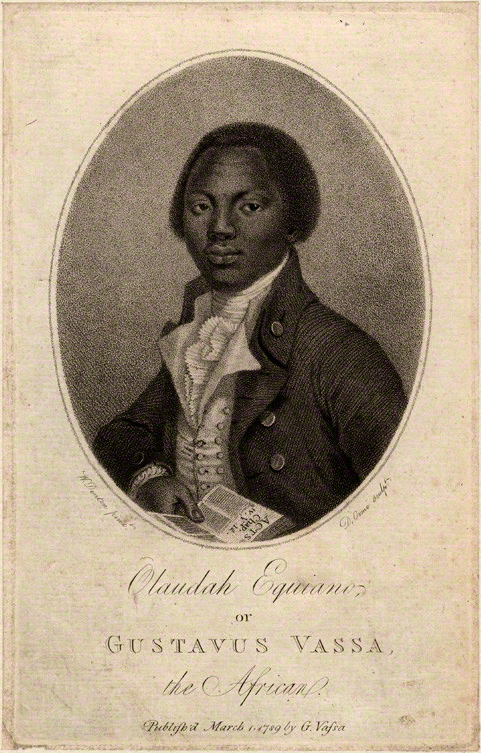
Equiano’s story is unique in that he includes details about his life prior to his capture and enslavement as a child in Africa. His story describes his life which includes his time as an enslaved sailor, the granting of his freedom, his recapture and subsequent re-enslavement, and his final emancipation.
- Hurston, Zora Neale, and Deborah G. Plant. 2018. Barracoon: The Story of the Last “Black Cargo.” Amistad. (Based on Hurston’s 1927 interviews with Cudjoe Lewis, the last survivor of the Clotilda)
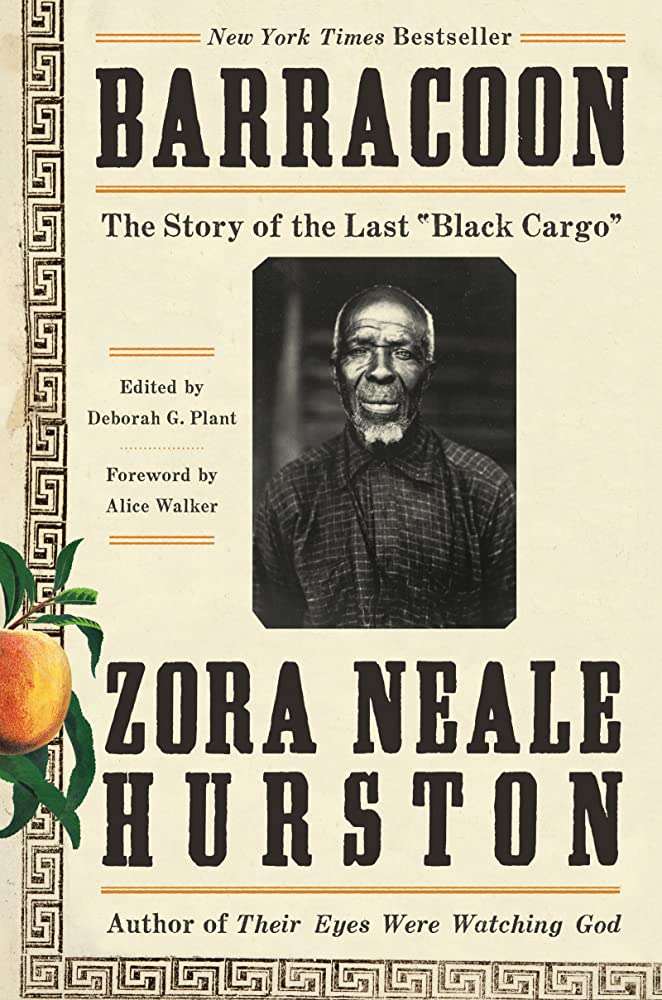
This work by Hurston is based on the multiple interviews she conducted with formerly enslaved man named Oluale Kossola (also know as Cudjoe Lewis, ca. 1841-1935) during the time she worked for the Federal Writers Project. He was believed to be one of the last living survivors of the Middle Passage on the illegal slave ship the Clotilda with memories of Africa before his capture. The interviews took place from 1927-28, but Hurston’s manuscript she produced was never published during her lifetime.
- Jacobs, Harriet. 1861. Incidents in the Life of a Slave Girl: Written by Herself. Thayer & Eldridge.
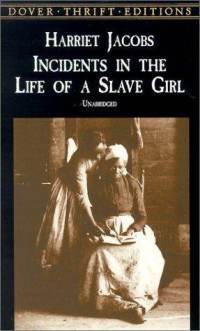
Harriet Jacobs’ autobiography first published in January of 1861 conveys the trauma of family separation, the seven years she lived in the cramped roof space of her own grandmother’s house, the sexual violence she endured from the man who enslaved her, and the continued torment of constant degradation she contended with as a free Black woman working in the North after her eventual escape. This story is considered by many to be an American Classic, allowing readers to deeply engage and empathize with Jacobs’ story through her human experience.
- Kemble, Frances Anne. Journal of a Residence on a Georgian Plantation in 1838-1839. New York: Harper and Brothers Publishers, 1863.
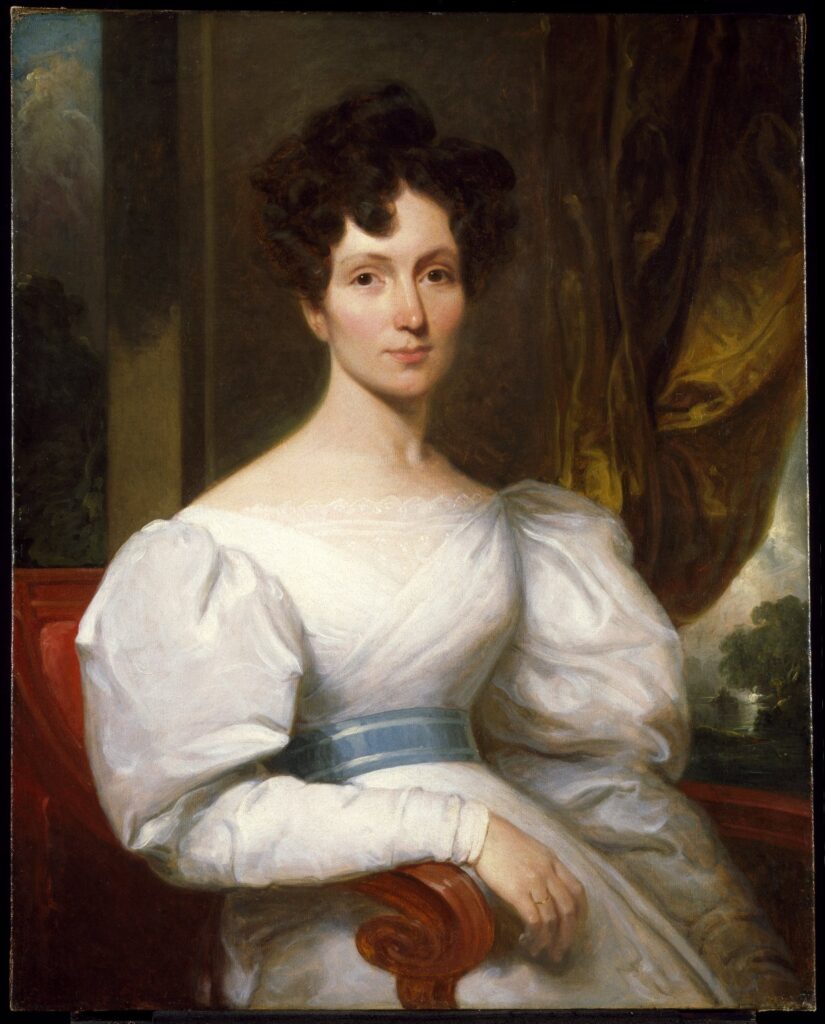
Kemble wrote this memoir several decades after the experiences described in this text, but what this text provides is a period account of an abolitionist-minded English woman who traveled to Georgia after her marriage to Pierce Butler, one of Georgia’s wealthiest enslavers. She describes the journey south from Philadelphia, the interactions she had with the local elite slave-owning class in Georgia, and her observations of and interactions with the enslaved people on her husband’s plantation. What makes this account unique is that it comes from a person whose advocacy for the abolition of slavery was catalyzed only later in life by her marriage to one of the country’s wealthiest slave owners.
- Douglass, Frederick. 1845. Narrative of the Life of Frederick Douglass. Boston, MA: Anti-Slavery Office.
- Du Bois, W.E.B.. The Souls of Black Folk. Chicago: A. C. McClurg & Co, 1903.
- Du Bois, W.E.B.. Black Reconstruction in America, 1860-1880. New York: Harcourt, Brace and Howe, 1935.
- May, Cedrick. The Collected Works of Jupiter Hammon. Knoxville: University of Tennessee Press, 2017.
- Said, Omar Ibn. A Muslim American Slave: The Life of Omar Ibn Said. Madison: University of Wisconsin Press, 2011.
- Truth, Sojourner. “Ain’t I a Woman” (speech).
- Wilson, Harriet E.. Our Nig: Sketches from the Life of a Free Black. Geo. C. Rand & Avery, 1859. Reissued in 1984. Edited by Henry Louis Gates, Jr. London: Allison & Busby. Autobiographical novel.
Race & Slavery Today:
These texts are not what most historians would consider “academic,” but they are extremely useful in approaching the work of interpreting slavery at our house museums. These books and articles can be used as resources to do the deeply personal work within ourselves to reckon with this very sensitive and complicated history.
- Magee, Rhonda V.. The Inner Work of Racial Justice: Healing Ourselves and Transforming Our Communities Through Mindfulness. United States: Penguin Publishing Group, 2021.
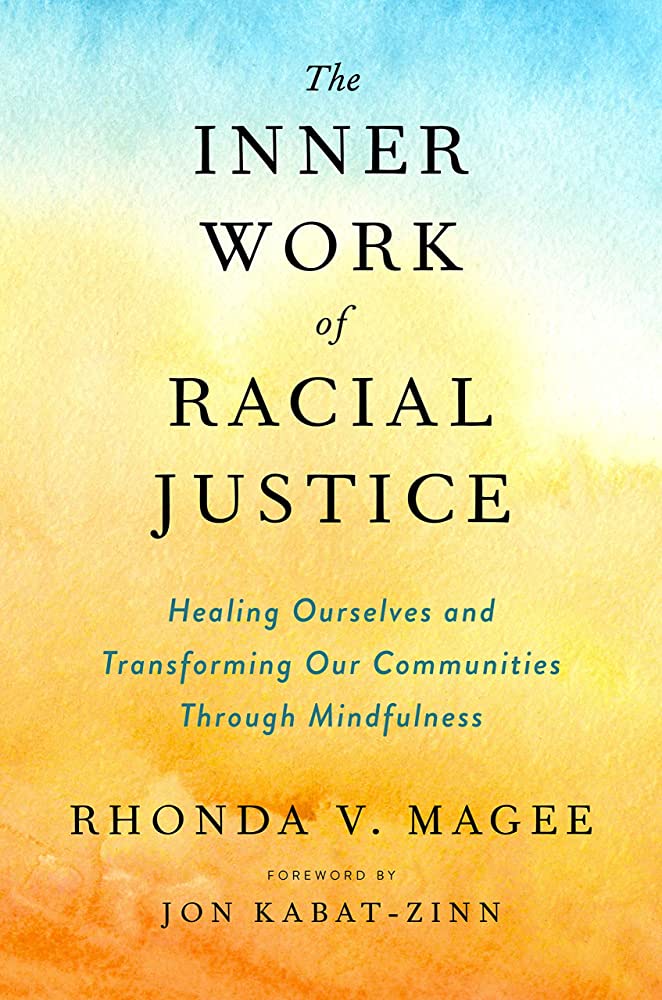
Rhonda Magee uses her background in sociology and law to help her readers unpack unconscious bias with mindfulness- and compassion-based approaches. Magee employs real-life examples of conversations she’s had with students as a law professor as well as from her lived experiences as a Black woman.
- Menakem, Resmaa. My Grandmother’s Hands: Racialized Trauma and the Pathway to Mending Our Hearts and Bodies. United States: Central Recovery Press, LLC, 2017.
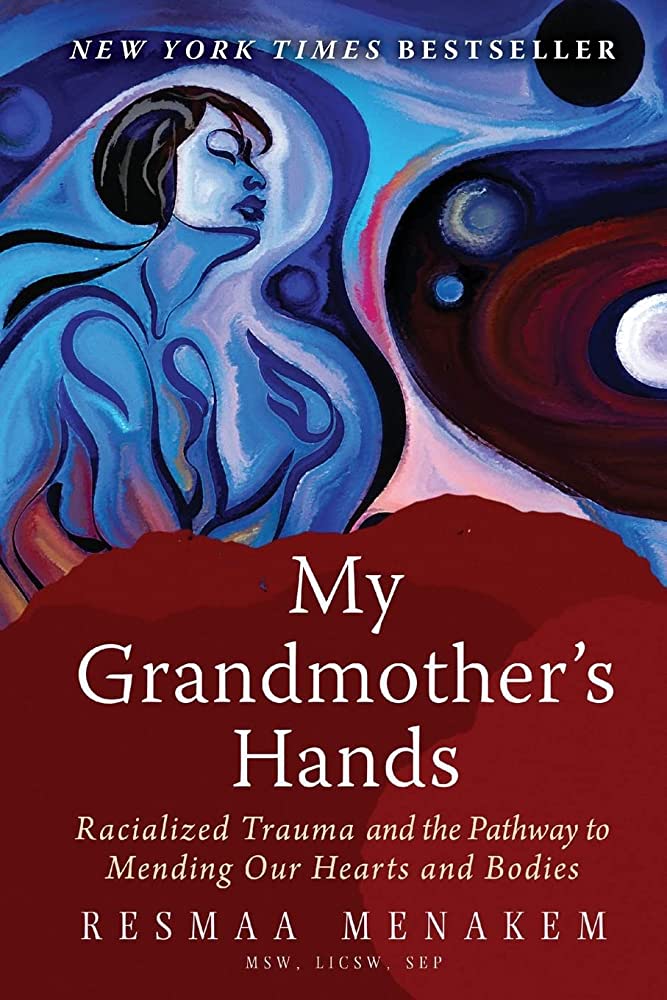
Resmaa Menakem is an anti-racism writer whose work underscores that racism is not just a matter of mindset, but is also a bodily issue. This book uses the latest neuroscience and somatic healing methods to inform a step-by-step process to lead readers through exercises in addressing internalized racism impressed into our unconsciousness. Menakem also provides guided meditations throughout the book that help readers focus on different aspects of this personal and collective healing process.
- Saad, Layla. Me and White Supremacy: Combat Racism, Change the World, and Become a Good Ancestor. United States: Sourcebooks, 2020.
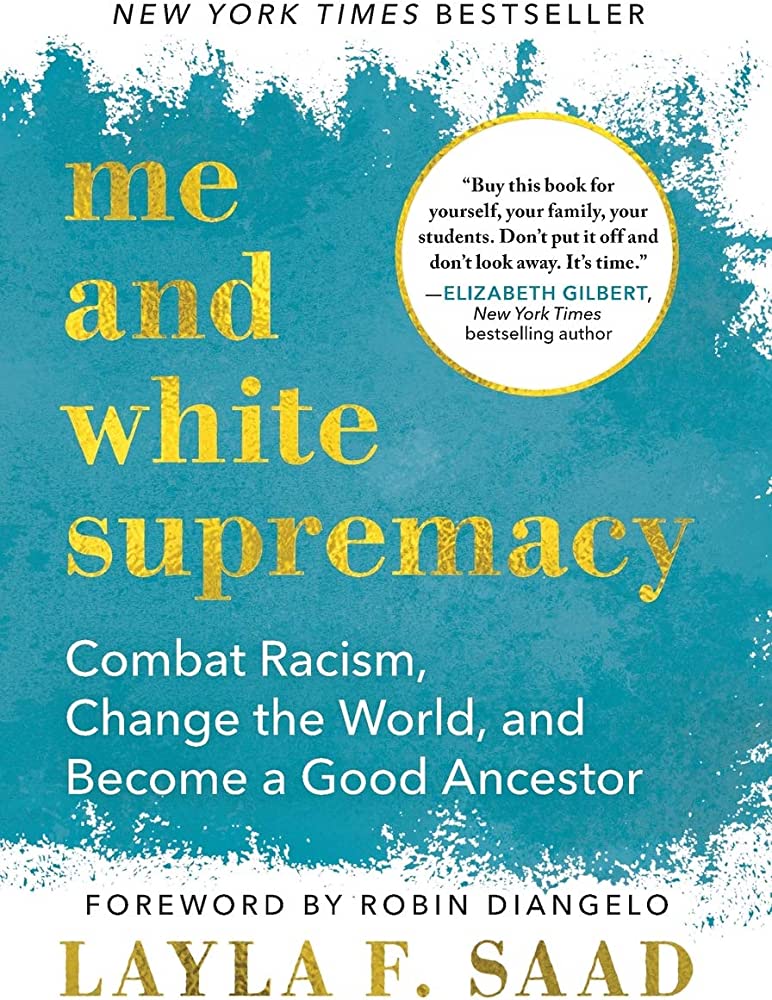
Layla Saad uses her unique perspective at the intersection of being an East African, Arab, British, Black, Muslim woman who was born in the UK and now resides in Qatar in creating a step-by-step reflection process for readers of this book to understand their white privilege, their (sometimes unconcious) participation in white supremacist systems of oppression, and how their actions can negatively effect BIPOC. As the title states, this book helps us to become better ancestors for our future generations.
- Appiah, Kwame Anthony. “The Case for Capitalizing the B in Black.” The Atlantic, June, 18, 2020.
- Chugh, Dolly. A More Just Future: Psychological Tools for Reckoning with Our Past and Driving Social Change. United States: Atria Books, 2022.
- Griffith, Michael Diaz (@michaeldiazgriffith). “The Anti-Racist Preservationist’s Guide to Confederate Monuments: Their Past and a Future Without Them,” Instagram, June 10, 2020.
- Hannah-Jones, Nikole, Mary Elliott, Jazmine Hughes, Jake Silverstein, New York Times Company, Smithsonian Institution, and 1619 Project. 2019. The 1619 Project : New York Times Magazine August 18 2019. New York N.Y: New York Times.